
Blog
How Football Shirts Are Made: Materials, Stitching, Printing & Quality Explained

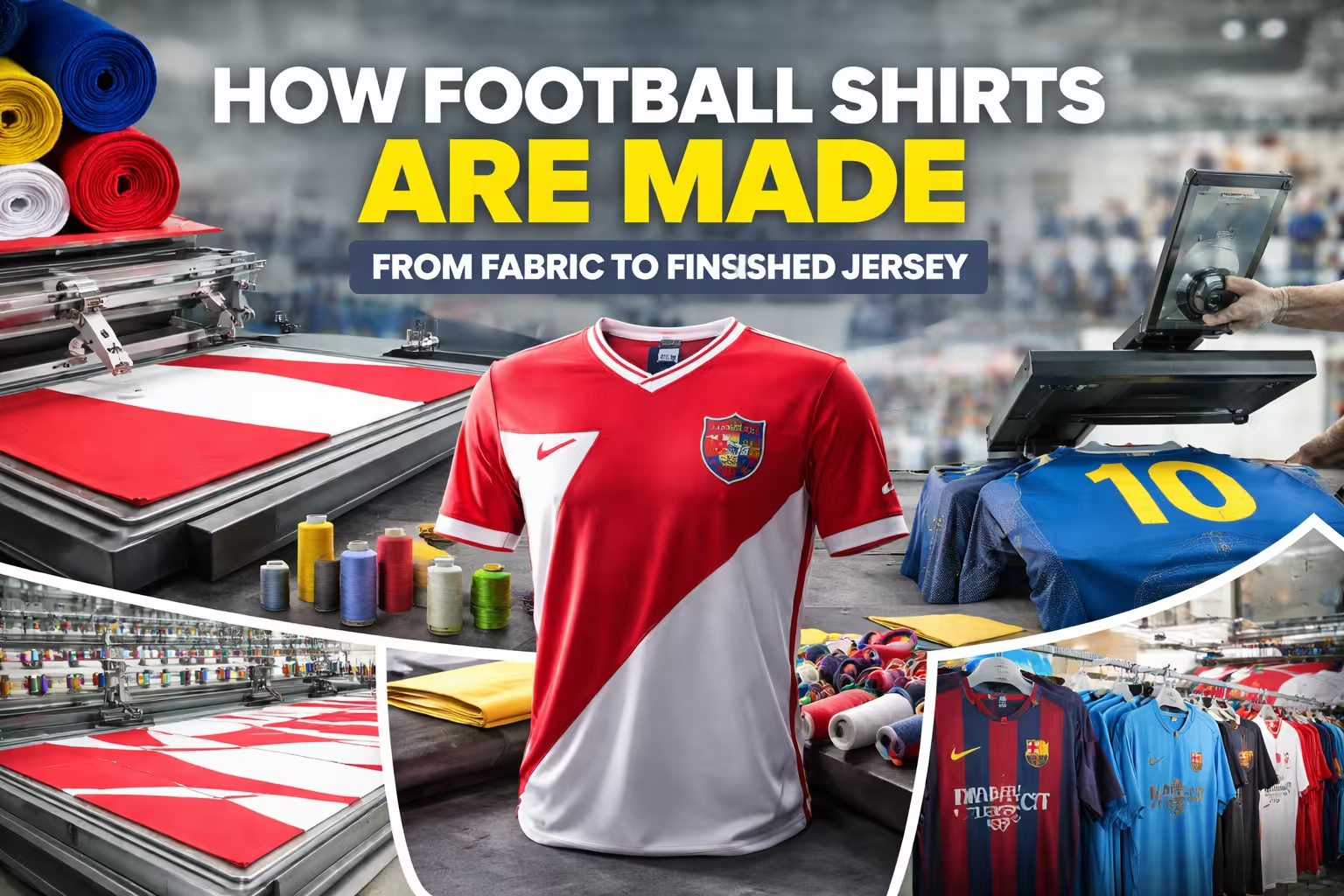
To be completely upfront, it took me a long while before to realize how much effort was put into making football shirts. If the badge was good and the size was right, that was all I needed. Nonetheless, with time and experience, you start to observe different things. Some are always offering comfort even after wearing them for hours. The others, on the contrary, get worse with every wash, despite being initially great.
That’s when you realize a football shirt isn’t just fabric with a logo on it. There’s a whole process behind it such as choices about material, design, stitching, and finishing that most people never see. And those choices matter more than we think. They decide whether a shirt becomes your go-to on match day or something you stop reaching for without really knowing why.
It Starts With the Fabric
Modern football shirts are almost always made from polyester. That wasn’t always the case. Years ago, cotton kits were common, but anyone who played in them remembers how heavy they became once sweat kicked in. Polyester changed everything. It’s light, dries quickly, and doesn’t cling to the body. Most shirts today also use variations of polyester — mesh weaves, microfibers, or blended fabrics — to improve airflow. Match shirts (the ones players wear on the pitch) use a thinner, lighter fabric. Replica shirts are slightly heavier, which actually makes sense. Fans wear them longer, wash them more often, and expect them to last.
That difference in fabric alone explains why two shirts that look identical can feel completely different. Explore our complete range of football shirts made for fans worldwide.
Designing a Football Shirt Is More Technical Than It Looks
From the outside, a football shirt design looks simple: colors, badge, sponsor, done. In reality, it’s more detailed than most people realize.
Designers plan:
- Panel placement
- Collar shape
- Sleeve cut
- Ventilation zones
Small things matter here. A seam in the wrong place can rub during movement. Poor panel layout can make a shirt twist after washing. This is why experienced designers matter — not just software. There’s also a difference in intent. Match shirts are designed to perform under pressure. Replica shirts are designed to be worn comfortably all day. The design choices reflect that. Discover high-quality national team football shirts with long-lasting prints.
Cutting the Panels (Where Mistakes Can Ruin Everything)
Once the design is locked, fabric rolls are cut into panels: front, back, sleeves, and sides.
In large-scale production, computer-controlled cutting machines are used to keep everything consistent. But even then, human supervision matters. Fabric stretches differently depending on direction, temperature, and batch quality.
In smaller workshops, experienced cutters still do this work by hand. They notice things machines miss — tension in the fabric, alignment issues, slight inconsistencies. Those small judgments can decide whether a shirt fits naturally or feels “off”. Shop comfortable and durable replica football shirts for everyday wear.
Printing: Where the Shirt Comes Alive
This is the stage where the shirt starts to look like a football shirt. Most modern kits use sublimation printing. Instead of sitting on top of the fabric, the ink becomes part of it. That’s why the design doesn’t crack or peel, even after many washes. Names, numbers, and sponsor logos are usually added later using heat presses or embroidery. When done properly, they stay flexible and smooth. When done cheaply, they stiffen, fade, or start peeling — something every football fan has seen at least once. Good printing isn’t flashy. It’s quiet. You only notice it years later when it still looks fine. Check out our newest football shirt arrivals available for global delivery.
Stitching and Assembly (The Most Underrated Step)
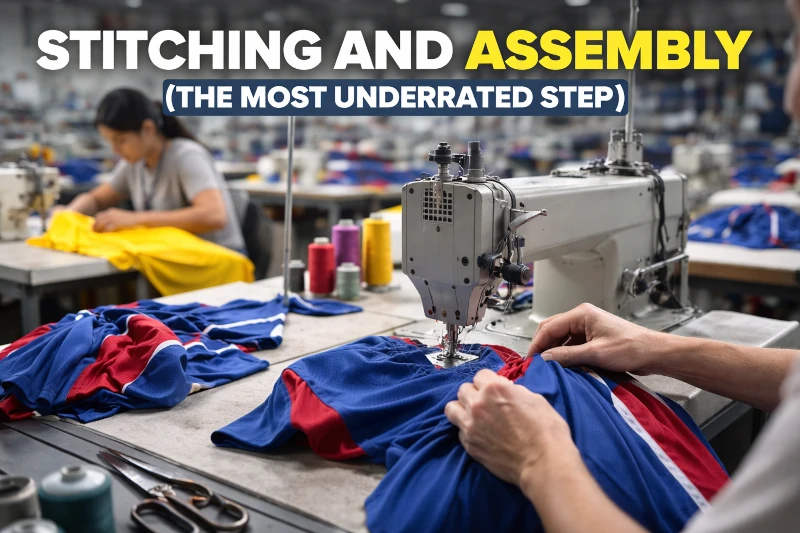
This is the part no one talks about, but it might be the most important. Panels are stitched together using flat seams to avoid irritation. Bad stitching doesn’t always show immediately, but you feel it. The shirt pulls awkwardly. It rubs under the arms. It never quite sits right. Skilled stitching makes a shirt disappear when you wear it. You don’t think about it — which is exactly the point. Factories with long experience in sportswear understand this. They know where flexibility matters and where strength matters more.
Quality Control Isn’t Optional
Before a shirt is finished, it’s inspected. Fit, stitching, printing, alignment — everything is checked. Shirts that don’t pass are corrected or removed. This step is what separates a reliable jersey from something that only looks good in photos. You can usually feel the difference immediately when quality control is taken seriously. Find premium-finish football jerseys inspired by professional kits.
Match Shirts vs Replica Shirts (What You’re Really Buying)
This question comes up a lot, and the answer is simple.
Match shirts:
- Lighter
- Slimmer fit
- Built for performance
Replica shirts:
- Slightly heavier
- More durable
- Better for everyday wear
Neither is “better” overall. They’re just made for different purposes. Understanding that helps you choose the right one instead of being disappointed later.
Where Are Football Shirts Made?
The global production of football shirts is still the major contribution of Pakistan to the world of sportswear. The cities of Sialkot, Lahore, and Faisalabad have huge expertise in the areas of cutting, stitching, printing, and finishing sports garments, thanks to decades of practice. The presence of a skilled workforce, the production of smaller batches, and the quality checks done manually all contribute to the high level of consistency. That experience displays in the final product — especially in replica kits intended to be durable.
How to Tell If a Football Shirt Is Well Made
You don’t need to be an expert. Just check a few things:
- Fabric should feel light but not flimsy
- Printing should feel smooth, not stiff
- Stitching should be flat and even
- Fit should feel natural, not forced
A good football shirt feels right the first time you wear it — and still feels right months later.
Final Thoughts
Football shirts are not merely prints on textile but the outcome of numerous small choices like the selection of materials, the precision of cutting, the various printing methods, and the quality of stitching. When all these factors are combined correctly, then a shirt is produced that not only appears good but also has a good feel to it. And after you have observed the difference, it becomes difficult to go back to the state of not noticing it.
“A good football shirt doesn’t try to impress you. It just does its job quietly, every time you wear it.”
Learn more about quality and craftsmanship in how footballs are made.
FAQs
1. What materials are football shirts made of?
Mostly polyester, sometimes with a little stretch for comfort and movement.
2. What’s the difference between match and replica shirts?
Match shirts are super light for players, replicas are thicker and just feel more solid.
3. How can I spot a good football shirt?
It should feel soft and the stitching should not rub and the prints should not peel after a wash.